
,
Speed Differences Between Trucks & Cars on I-95
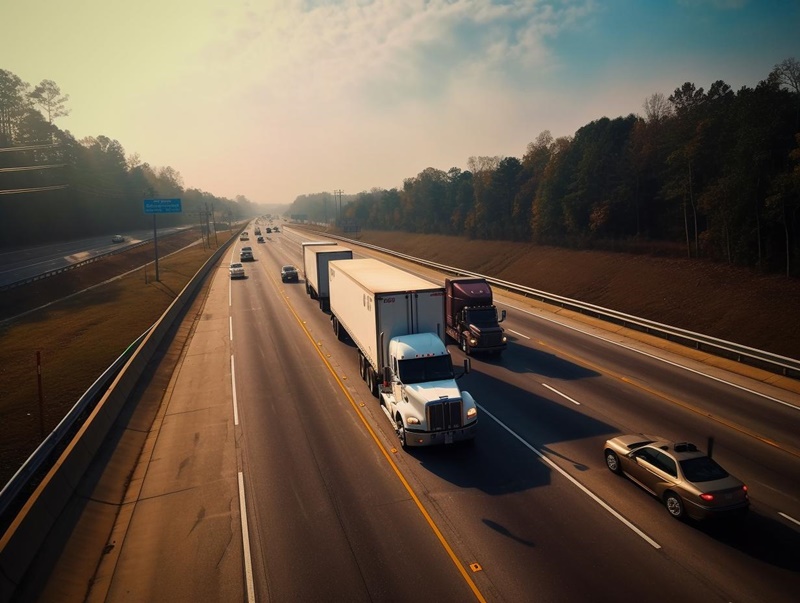

Interstate 95 (I-95) is the East Coast’s main artery. It runs from Florida to Maine, passing through ports, distribution hubs, and dense metro corridors where freight and commuter traffic overlap all day. That mix is why the road stays economically vital. Cars and semis share the same lanes, but they do not share the same performance. Passenger vehicles accelerate quickly, brake faster, and often cruise at higher speeds. Tractor-trailers take longer to build speed, lose momentum on grades, and require far more room to stop.
Those differences create speed differentials: gaps between how fast trucks move and how fast surrounding cars move. This post explains how truck versus car speed patterns form, why they trigger crashes, and what drivers can do to stay safer on this safety highway.
Why Speed Differentials Matter More than “Speeding”
Most people think of speed risk as a simple question: “Was someone going too fast?” On interstates like I-95, the bigger issue is often relative speed. Even if no one is technically speeding, a large gap between vehicle streams makes the road unstable.
The Federal Highway Administration (FHWA) has long noted that crash risk rises when vehicles travel much faster or much slower than the average flow, because speed variance increases lane changes and conflict points.
When speed gaps grow, drivers have less time to judge closing distances. Lane changes become sharper and more frequent. Braking waves start earlier and travel farther backward. That’s why speed differential safety highway issues are so closely tied to rear-end crashes, sideswipes, and chain-reaction pileups.
How I-95’s Layout Amplifies Truck-Car Speed Gaps
Interstate 95 isn’t a single kind of road. In one trip, you might pass through open rural stretches, then plunge into stop-and-go metro belts. Each environment magnifies speed differentials in its own way.
In an urban corridor, interchanges sit close together. Cars merge, exit, and weave continuously. Trucks do the same, but at a slower rhythm. A car can speed-match a gap in seconds; a semi can’t. That mismatch creates friction right where the road is already busiest.
In rural or semi-rural stretches, the problem flips. Cars often raise cruising speed because the road feels open. Trucks keep steadier, regulated speeds for fuel and safety. Over long distances, that steady gap becomes a sudden closing event when a car comes up on a slow-moving rig near a hill, a work zone, or a weather pocket. I-95’s constant freight presence means those moments happen again and again, not once in a while.
Where Truck vs Car Speed on I-95 Risks Show Up Most

Speed differentials don’t create danger everywhere equally. They cluster where roadway demands and traffic mix produce the biggest gaps. Look out for these I-95 settings:
- Urban bottlenecks where speeds change in seconds.
- Freight-dense zones near ports and distribution centers.
- Rolling roadblocks when one truck slowly passes another.
- Construction corridors that narrow lanes.
- Bad-weather pockets where trucks slow early, but cars don’t.
- Nighttime rural runs where car speeds rise.
These spots are predictable. If you recognize them early, you can drive with more patience and spacing, instead of getting forced into last-second moves.
Crash Patterns that Grow out of Speed Gaps
Once a differential forms, the crashes it produces tend to repeat the same shapes. Rear-end collisions are the most common. A car approaches a slower truck, underestimates the closing speed, and brakes too late.
Sideswipes often come next. Drivers rush to pass around slow trucks and don’t fully clear blind spots. Or they merge back right too early to reach an exit, clipping a truck’s front quarter. The mismatch in vehicle size makes these hits especially destabilizing.
Then there are chain-reaction crashes. When a slow-moving truck triggers a braking wave, vehicles behind react in a staggered, uneven way. Trucks need longer stopping distances, so if a car brakes sharply in front of a semi, the semi may not have room to stop.
What Drivers Can Do to Reduce Differential Risk on I-95
You can’t control truck speeds, and you can’t flatten I-95’s congestion. What you can do is keep the mismatch from surprising you.
The safest habits are simple: anticipate slow trucks ahead, leave a bigger buffer, and pass decisively only when you have a clean window. Avoid hovering beside trailers where you have no escape space. If traffic is compressing near a junction, resist the urge to thread the smallest gap just to stay “moving.” That’s where most sideswipes start.
At night or in the rain, scale your speed to what you can actually see. If visibility shrinks, your reaction time shrinks too, and closing distance on a slow truck becomes dangerous quickly. The goal is to avoid entering a speed-gap scenario at a speed your eyes can’t support.
If a Crash Happens, What to Document
Differential-speed crashes often turn into “he said, she said” unless the scene is well-documented. If you’re involved in one, focus on safety first, then gather evidence while it’s safe and legal to do so.
- Photos of everything you can.
- Images of any work-zone setup or signage near the crash.
- Weather and visibility conditions.
- The truck’s company name, DOT number, and plate, if visible.
- Witness contact info from drivers who saw the speed or lane-change buildup.
These details help show whether a speed mismatch, an unsafe pass, or a braking wave set the collision in motion.
Closing Takeaways for Safer I-95 Travel
Speed differences between trucks and cars don’t need to feel like a constant threat, but they do need respect. The danger is the way incompatible speeds compress decision time and force sudden lane moves in busy corridors. If you treat speed gaps as early warning signs, you naturally slow sooner, pass cleaner, and create more reaction space.
That mindset turns I-95 from a surprise zone into a predictable system you can drive through safely, even when freight traffic is heavy. And if something does go wrong, having clear documentation and prompt medical care can make a huge difference in your recovery and any claim that follows.
If you or someone you know has been injured in a crash tied to speed differentials or heavy truck traffic on I-95, we can put you in touch with an I-95 vehicle accident attorney.
Accidents currently listed on i95accidentalerts.com
28 accidents in 2022
112 accidents in 2022
1 accident in 2022
1 accident in 2022